
RBI
What is Digital Lending Compliance and Why Has it Become Non-Negotiable in 2026?
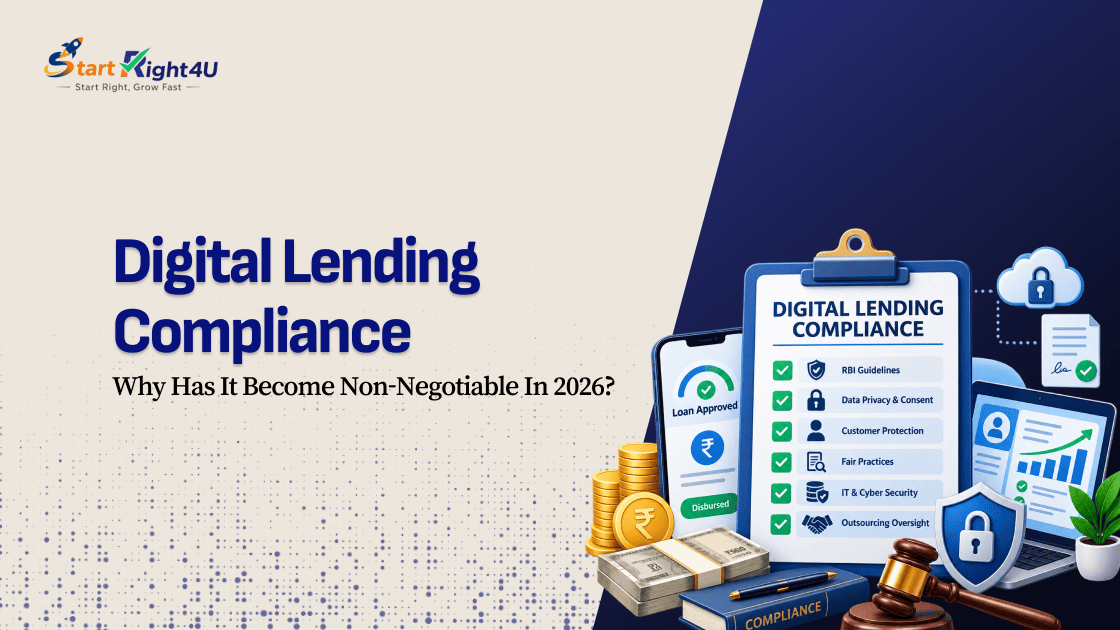
Digital lending has quietly become the backbone of consumer credit in India. A borrower today can apply for a personal loan, get it underwritten, and see the money land in their bank account within minutes, all from a mobile app they downloaded a few hours earlier. That speed is exactly why regulators started paying close attention. Between 2020 and 2022, India saw a wave of complaints about lending apps charging exorbitant interest, harassing borrowers through their phone contacts, and disappearing overnight with no grievance mechanism in place. The Reserve Bank of India responded first with the 2022 Digital Lending Guidelines and then consolidated everything into a single, binding rulebook through the RBI (Digital Lending) Directions, 2025, issued on 8th May 2025.
Digital lending compliance, in simple terms, is the set of legal, operational, and technological obligations that banks, NBFCs, fintech platforms, and their partner apps must follow while sourcing, disbursing, servicing, and recovering loans through digital channels. It is not a one-time registration exercise. It touches how you disclose costs to a borrower, where you store their data, how you structure your partnership with a lending app, and how quickly you resolve a complaint. For any business operating in this space, compliance is now the difference between a sustainable lending operation and one that faces RBI enforcement action, penalties, or a complete ban on onboarding new customers.
This article breaks down what digital lending compliance actually involves in India today, who it applies to, and how a lending business can build a framework that keeps regulators satisfied and borrowers protected.
Who is Required to Comply with India's Digital Lending Regulations?
The RBI's framework does not just apply to banks. It covers every Regulated Entity, commonly called an RE, which includes commercial banks, primary urban and state co-operative banks, all non-banking financial companies including housing finance companies, and all-India financial institutions. It also extends, indirectly but firmly, to every Lending Service Provider, or LSP, that these regulated entities work with.
An LSP is typically a fintech company or a digital platform that helps an RE with functions such as customer acquisition, credit underwriting support, loan servicing, or recovery, without itself holding a lending licence. Many of the loan apps people download from the Play Store or App Store are actually LSPs operating on behalf of a bank or NBFC in the background. The RBI has made it explicit that this arrangement does not dilute accountability. If an LSP mishandles a customer's data or misrepresents loan terms, the regulated entity behind it is held fully responsible, as though it had committed the violation itself.
What is the Difference Between a Regulated Entity and a Lending Service Provider?
A Regulated Entity is the licensed lender, the bank or NBFC that actually carries the loan on its books and bears the credit risk. A Lending Service Provider, on the other hand, is an outsourced partner that performs specific functions on the RE's behalf but does not hold a lending licence of its own. The distinction matters because only the RE can disburse and receive loan repayments directly, and only the RE can be held formally accountable by the RBI. An LSP can build the app, the underwriting model, and the customer interface, but it must operate entirely within the boundaries set by its partner RE's compliance framework, agreements, and audit oversight. This is why due diligence on LSP partnerships has become one of the busiest areas of digital lending compliance work over the last two years.
What are the Compliance Requirements Every Digital Lender Must Meet?
The 2025 Directions bring together years of fragmented circulars into one enforceable structure. While the full framework runs into dozens of clauses, most compliance programmes are built around a handful of recurring pillars: direct disbursal and repayment, standardised disclosures, capped default guarantees, data minimisation, and grievance redressal. The table below summarises the requirements that most compliance teams treat as their starting checklist.
Compliance Area | What the Rule Requires |
Loan Disbursal & Repayment | Money must flow directly between the borrower's bank account and the RE's account, never through a pass-through account controlled by an LSP or app |
Key Fact Statement (KFS) | A standardised, easy-to-read summary of interest rate, fees, and Annual Percentage Rate must be shared with the borrower before the loan is sanctioned |
Default Loss Guarantee (DLG/FLDG) | Any guarantee arrangement between an RE and an LSP is capped, typically at 5% of the outstanding loan portfolio, to prevent disguised co-lending risk |
Data Collection | Apps may access only camera, microphone, and location, and only with one-time, purpose-specific consent; contacts, SMS, and call logs are off-limits |
Data Storage | Borrower data must be stored on servers located in India, with any data processed abroad deleted and restored domestically within 24 hours |
Cooling-Off Period | Borrowers must be given a short window to exit the loan by repaying the principal and proportionate charges, without penalty |
Grievance Redressal | A dedicated nodal officer must be appointed, and complaints must be resolved within 30 days, failing which the borrower can escalate to the RBI Ombudsman |
How Does the Key Fact Statement Protect Both Borrowers and Lenders?
The Key Fact Statement, or KFS, is arguably the single most visible compliance artefact in digital lending today. Before a loan is sanctioned, the lender must present the borrower with a machine-readable, standardised document that lays out the interest rate, all applicable fees, the Annual Percentage Rate, the recovery mechanism, and the borrower's rights, including the cooling-off period. The intent is to end the practice of burying processing fees, penal charges, or insurance add-ons inside dense loan agreements that borrowers rarely read in full. For lenders, the KFS is not just a consumer-protection tool; it is also a shield against future disputes. When a borrower later disputes a charge, the KFS becomes the primary evidence of what was disclosed and when. Compliance teams that treat the KFS as a static template rather than a dynamic, loan-specific document tend to run into trouble during RBI supervisory reviews, because inconsistencies between the KFS and the actual loan agreement are one of the first things examiners check.
What Data Protection and Localisation Rules Apply to Digital Lending Apps?
Data has been at the centre of nearly every major digital lending scandal in India, from apps that scraped a borrower's entire contact list to use for recovery harassment, to platforms that sold customer data to third parties without consent. The RBI's response works on two layers now. The first is the digital lending framework itself, which restricts DLAs to accessing only camera, microphone, and location permissions, and only with explicit, one-time, purpose-specific consent. Access to contacts, call logs, SMS messages, and photo galleries is prohibited outright, and any data collected must be need-based rather than opportunistic.
The second layer is the Digital Personal Data Protection Act, 2023, which runs alongside the RBI rules and adds obligations around explicit consent, purpose limitation, breach notification within 72 hours to the Data Protection Board, and a borrower's right to request erasure of their data. Lenders operating digital platforms now have to satisfy both regimes simultaneously, and the penalties for getting data protection wrong are severe, with DPDP Act violations capable of attracting fines running into hundreds of crores. On top of consent and access controls, all personal borrower data collected through a DLA must be stored on servers physically located in India, and if any part of it is processed overseas for a legitimate technical reason, it must be deleted from the foreign server and restored in India within 24 hours.
How Should Lenders Structure Grievance Redressal and the Cooling-Off Period?
Grievance redressal used to be treated as a customer support afterthought in many fintech lending operations. Under the current framework, it is a structural requirement. Every RE and every LSP working with it must appoint a dedicated nodal officer specifically for digital lending complaints, and that officer's contact details must be clearly visible on the website, inside the app, and within the KFS itself. Complaints cannot sit unresolved indefinitely; the RBI has fixed a 30-day resolution window, after which the borrower has the right to escalate directly to the RBI Ombudsman, bypassing the lender entirely.
Alongside grievance redressal sits the cooling-off period, a short window immediately after loan sanction during which a borrower can walk away from the loan by repaying only the principal and a proportionate part of the interest and charges, with no prepayment penalty. This provision exists to counter aggressive, high-pressure sales tactics that some digital lenders used to push borrowers into loans they had not fully understood. For lending businesses, building this into the loan lifecycle workflow, rather than bolting it on later, tends to be far cheaper and far less error-prone.
What Happens If a Digital Lender Fails to Comply with RBI Guidelines?
Non-compliance is not treated as a paperwork lapse. RBI supervisory teams examine compliance with the Digital Lending Directions on a sample basis during their regular assessments, and where gaps are found, the response ranges from a formal rectification directive to more serious supervisory and enforcement action, which can include restrictions on onboarding new customers, monetary penalties, and in serious or repeated cases, cancellation of the entity's certificate of registration. Because the RE is held accountable for every act of its LSPs, a single non-compliant partner app can expose an otherwise well-run bank or NBFC to regulatory action. This is precisely why due diligence, contractual clarity, and ongoing monitoring of LSP relationships have become as important as the lender's own internal processes.
How Can Lenders Build a Sustainable Digital Lending Compliance Framework?
Building compliance that survives an actual RBI audit, rather than one that just looks good on paper, tends to come down to a few habits repeated consistently. Compliance policies need to be written into contracts with every LSP, not left as informal understanding. Data access permissions inside the app need to be technically restricted, not just disclosed in a privacy policy that nobody reads. The KFS needs to be generated dynamically for each loan rather than copy-pasted from a template. And grievance handling needs a real owner with a real SLA, not a shared inbox that nobody checks on weekends.
Why Doesn't Outsourcing to an LSP Reduce Your Compliance Responsibility?
Many lending businesses assume that once a function like customer acquisition or collections is outsourced to a specialised fintech partner, the compliance burden for that function moves with it. The RBI's framework explicitly rejects this idea. Every action an LSP takes on behalf of an RE is treated as though the RE performed it directly, which means outsourcing changes who does the work but never changes who answers for it. That single principle is what has pushed regulated entities to move from occasional LSP reviews to continuous audits, detailed service-level agreements, and real-time monitoring of how their partner apps behave in the market.
Getting the Details Right, Without Doing it All Alone
None of this is meant to suggest that digital lending compliance is something a business can figure out from a checklist and a weekend of reading circulars. The Directions run into dense legal language, cross-reference the DPDP Act, and get updated frequently enough that even well-resourced compliance teams struggle to keep pace with every clarification. This is where firms that specialise in regulatory and legal compliance tend to add real value, not by replacing a company's internal compliance function, but by supporting it. StartRight4U works with NBFCs, fintech platforms, and lending businesses across India on exactly this kind of regulatory groundwork, from structuring LSP agreements and KFS documentation correctly, to helping businesses understand where they stand against RBI and DPDP requirements before a regulator has to point it out for them. For a founder or compliance officer trying to keep a digital lending product both fast and fully within the law, having that kind of experienced support in the background often makes the difference between reacting to a notice and never getting one in the first place.