
RBI
PRAVAAH Application Support: Using RBI's PRAVAAH Portal Without Errors or Delays
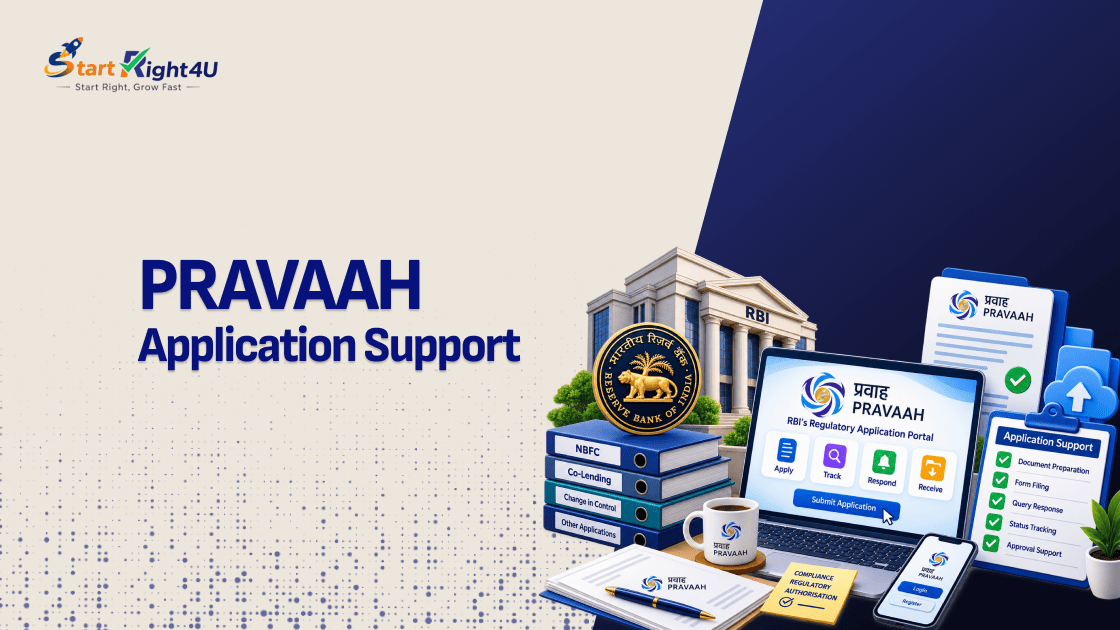
When the Reserve Bank of India rolled out PRAVAAH, it did more than digitise a handful of forms. It fundamentally changed how banks, NBFCs, payment companies, cooperative societies, and even individual applicants approach the Reserve Bank for licences, approvals, and authorisations. What used to be a slow, paper-heavy process involving physical letters, follow-up emails, and uncertain timelines has now been condensed into a single web portal. But with that change has come a new set of questions from applicants: how does one register correctly, which form applies to a particular request, why does an application get stuck in "pending clarification," and where can genuine PRAVAAH application support be found when something goes wrong. This article walks through all of that in detail, based on how the portal actually functions today.
What is PRAVAAH and Why Does it Need Dedicated Support?
PRAVAAH stands for Platform for Regulatory Application, Validation and Authorisation. The Reserve Bank of India launched this centralised online portal on May 28, 2024, to streamline the submission of applications for regulatory authorisations, licenses, and approvals, with the goal of ensuring seamless, secure, and faster delivery of services in a transparent manner. It was built as a single-window replacement for what used to be a scattered, department-by-department process where applicants often had no visibility into where their request stood.
The portal did not stay optional for long. Starting May 1, 2025, all applicants, including regulated entities, have been advised to use PRAVAAH exclusively for submitting applications seeking regulatory authorisations, licenses, and approvals from the Reserve Bank. That mandate is precisely why "PRAVAAH application support" has become such a widely searched term. Overnight, thousands of compliance teams, company secretaries, chartered accountants, and first-time applicants had to shift from familiar offline or email-based channels to a structured digital workflow with its own rules, validations, and quirks. Anyone who has filled out a government portal knows that even a well-designed system throws up unexpected errors, unclear field requirements, or document formatting issues, and PRAVAAH is no exception. Getting the right support at the right stage often decides whether an application sails through or sits idle for weeks.
Who Needs to Use the PRAVAAH Portal, and For What Kind of Applications?
PRAVAAH is not limited to large banks. The portal allows individuals and entities, including regulated entities, non-regulated entities, and AD Banks, to apply for licenses, authorizations, and regulatory approvals across a wide spread of RBI departments. This means the user base ranges from a housing finance company seeking a change in shareholding, to a foreign national requesting permission to acquire immovable property in India, to a payment aggregator applying for authorisation, to a cooperative bank requesting a duplicate certificate of registration.
The list of eligible users includes small finance banks, local area banks, regional rural banks, urban co-operative banks, state and central co-operative banks, all-India financial institutions such as NABARD and SIDBI, housing finance companies, primary dealers, payment system operators, and credit information companies. On top of these regulated categories, individuals dealing with matters like foreign exchange approvals or NBFC-related requests can also access the portal directly. The sheer breadth of use cases is one reason the portal now hosts such a large form library. As of April 2025, 108 PRAVAAH forms had been published, covering nearly every recurring type of regulatory request handled by the RBI's various departments. If a specific form does not exist for an unusual request, applicants are not left stranded either, since the portal also provides regulatory, supervisory, and authorisation-related services through a general-purpose form for requests that fall outside the standard categories.
How Does the PRAVAAH Application Process Actually Work?
Understanding the flow matters more than most applicants realise, because a large share of support queries come from people who skip a step or misunderstand what happens after submission. The process generally begins with registration. Applicants create an account by verifying their email through an OTP and setting up a secure password and login credentials, after which authorised persons from a regulated entity can log in to access the application dashboard. It is worth noting that while first-time registration is required for every new applicant, the same registered mobile number can subsequently be used to log in, upload supporting documents, download files, and view the history and status of previously filed applications.
Once inside the dashboard, the applicant selects the relevant department and the specific application type from the available form library, fills in the dynamic fields, attaches the required declarations and supporting documents, and submits the request. From here, PRAVAAH takes over the tracking function. The portal displays application status and an approximate completion date in a grid format, visible under the "Application History" section after logging in with a registered mobile number and OTP, and the same updates are also pushed through SMS and email. If the RBI needs more information, it raises a query directly on the portal, and the applicant can then respond and submit additional details online through the same interface, rather than through a separate email thread. This closed-loop query and response mechanism is one of the biggest improvements PRAVAAH brought over the older, largely informal correspondence-based system, but it is also where many applicants need support, since a delayed or improperly worded response can stall an otherwise straightforward application for weeks.
A few practical details often decide how smoothly an applicant moves through this process. There is no application fee for submitting requests through PRAVAAH, one applicant can file multiple applications, and an incomplete form can be saved in draft mode and completed later at the applicant's convenience. Knowing these small operational facts in advance saves a lot of confusion during actual filing.
Why Do Applications Get Stuck, and What Kind of Support Actually Helps?
Most delays on PRAVAAH are not caused by RBI processing time but by errors that happen before or immediately after submission. The most frequent one is picking the wrong form category, since several departments handle overlapping subject matter and a wrongly classified request can bounce back or sit unattended in the wrong queue. Another common issue is incomplete documentation, where an applicant uploads a scanned certificate or board resolution that does not match the exact format the system expects, leading to a rejection or a clarification query later rather than an upfront error message. Draft applications left unsubmitted for long periods, mismatched authorised-signatory details, and OTP or login access issues for entities where the registered contact person has changed are also recurring problems.
This is exactly the gap that dedicated PRAVAAH application support fills. Technical support is expected to be available through the RBI's own helpdesk or the PRAVAAH Portal's contact section for platform-level issues such as login failures or upload errors. However, that channel is designed for technical glitches, not for guidance on which form applies to a particular regulatory situation, how to draft a response to an RBI query, or how to structure supporting documentation so it is accepted on the first attempt. For that layer of support, applicants typically rely on experienced compliance professionals or advisory firms who have handled similar filings before and understand both the portal's technical behaviour and the underlying RBI regulations.
What are the Benefits of Using PRAVAAH Compared to the Old System?
It helps to see PRAVAAH's advantages side by side with how regulatory applications used to work before the portal existed. The table below summarises the shift.
Aspect | Before PRAVAAH | With PRAVAAH |
|---|---|---|
Mode of submission | Physical letters or scattered emails to individual RBI departments | Single online portal for all eligible application types |
Status visibility | Little to no visibility; applicants relied on follow-up calls | Real-time tracking through the Application History dashboard |
Communication of queries | Informal, often through email threads with no fixed structure | Structured, on-portal query and response mechanism |
Turnaround updates | Manual follow-up required | Automated SMS and email alerts at each stage |
Documentation | Varying formats across departments | Standardized forms; over 100 forms available covering major departments |
Cost | No formal fee, but indirect costs from delays and rework | No application fee, with fewer errors due to structured fields |
Is There Any Fee, and What Happens After an Application is Approved or Rejected?
A question that comes up constantly is whether PRAVAAH charges applicants anything. It does not. There is no application fee to apply through the PRAVAAH portal, which removes one common barrier for smaller entities and individual applicants who might otherwise hesitate to approach the RBI directly. Once a request is under review, the relevant RBI department examines the application, may raise clarifications through the portal, and eventually communicates its decision. During the authorisation and decision stage, once the review is satisfactory, the RBI issues its approval or communicates its decision directly through the portal itself, closing the loop without requiring a separate physical letter or certificate dispatch in most cases. If a query is raised and left unanswered for too long, or if supporting documents are insufficient, the application can remain pending indefinitely, which is precisely why timely, accurate responses matter as much as the initial submission.
Getting PRAVAAH Right the First Time
Reading through the portal's design, it becomes clear that PRAVAAH was built to reward preparation. Applicants who understand which department and form category matches their request, who keep supporting documents ready in the expected format, and who respond to RBI queries promptly tend to move through the system far faster than those who treat it as a simple upload-and-wait process. For a first-time NBFC registration, a change in shareholding pattern, a payment system authorisation, or even a routine request like a duplicate certificate, the difference between a two-week approval and a two-month back-and-forth often comes down to how the initial application and subsequent responses were handled.
This is where teams that work with RBI compliance on a regular basis tend to add genuine value. At StartRight4U, the day-to-day work often involves helping businesses map their specific regulatory need to the correct PRAVAAH form, reviewing documentation before it is uploaded so that avoidable clarification queries do not arise later, and drafting timely, well-structured responses when the RBI does seek additional information on the portal. It is less about the technology itself and more about knowing how RBI departments actually evaluate these applications behind the scenes, something that only comes from having worked through the process repeatedly. For anyone finding the portal's requirements confusing or an application stuck without explanation, having that kind of experienced hand alongside the process usually makes the difference between frustration and a clean approval.